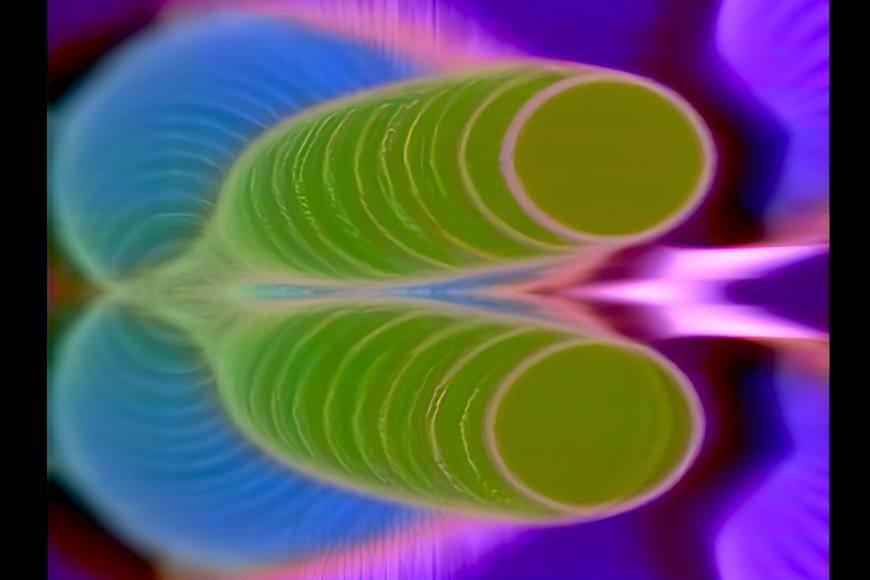
We all know synthesizers for music/sound. They modify electronic signals of sound. A Video synthesizer is kind of the same, it’s a device that can alter and generate video images. Electronic video signals could be mixed with other signals or fed back into the input device, taking complete control over color and form.
In the 1960s artists started to experimented with the new medium “video”. In contrast to regular celluloid film, video offered more possibilities for modulation and technical experimentation – and it was cheap!
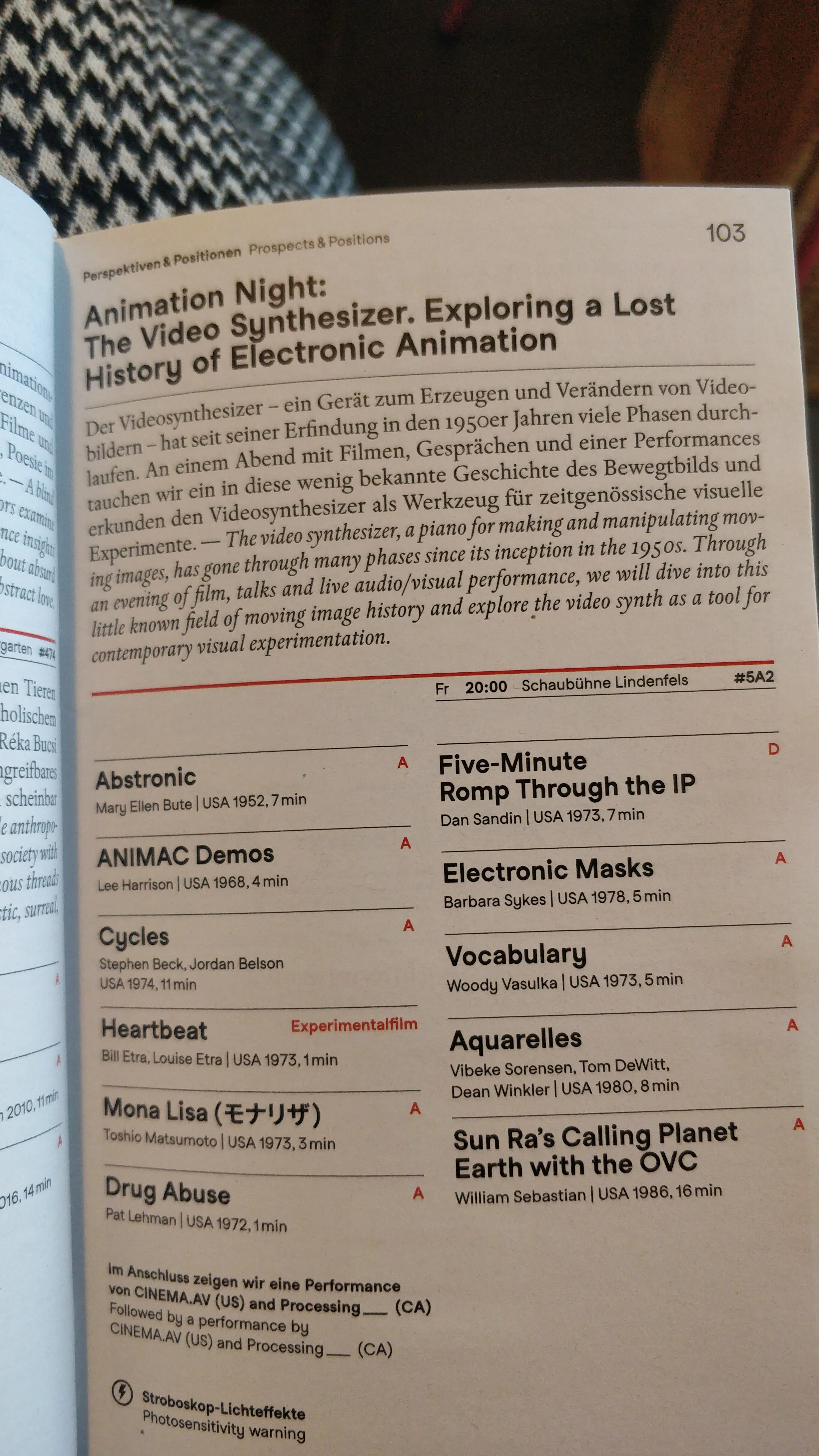
My highlights from the programme
”Abstronic” by Mary Ellen Bute (1952)
Mary Ellen Bute, trained as a painter, started to experiment with oscilloscopes in the early 1950s! She created this film by combining electronic images and traditional animation. An incredible pioneer of abstract animation!!
ANIMAC Demos (1968)
Years later, the engineer Lee Harrison invented the ANIMAC, which manipulated cathode rays to create animated figures and text. It was the start of a new era in motion graphics. Those animations were in created real-time by controlling cathode rays. Either manually or based on other electronic signals, such as sound! Check out this video, which animates a figure’s mouth based on the sound of a speaking voice … Isn’t that the first “Deepfake” in history?!! :-D
Five-Minute Romp Through the IP (with Dan Sandin) (1973)
A guy wearing a strange hat gives a tutorial on a physical device named "Sandin Image Processor". The device reminded me very much of node-based UIs such as Touch Designer – all those knobs that can chain different signal processing steps after one another. The video is both educational and a piece of art itself, check it out :-)From the perspective of a “creative technologist” this is so exciting: This spirit of hacking and reappropriating existing technology, working with the quirks in humurous ways – I can relate so much to that!